
 “Early morning. Run. New route. Took longer than I expected.”
Those cryptic lines are from “Iceman” (Season 4, Episode 18) of the hit TV series NCIS. Agent Ziva David, sporting an orange stocking cap, is explaining her rare tardiness.
No one comments on the reason for the new route or on Ziva’s unusual fashion choice.
Instead Agent Tony DiNozzo says, “We found a dead man walking.”
Ziva replies, “I’ve had enough of dead men walking.”
Their conversation turns to the team’s new case.
Casual viewers may not have comprehended the underlying current in this opening scene. But for the show’s fans, these quiet moments—Ziva’s new route, the orange cap, the phrase “dead man walking”—shimmer with emotion.
In the season’s 16th episode, Ziva becomes involved with a victim of radiation poison. She knows she’s seen him before, but where? Turns out he’s the runner in the orange cap she passes every day on her morning run. He recognizes her as the runner with the yellow windbreaker.
Episode 16’s title? “Dead Man Walking.”
The subtlety shown in this story arc fascinates me. Even if you’re not an NCIS fan, you may wish to watch these episodes to see how a matter-of-fact comment (“new route”), an object, and a specific phrase are given deepened subtext.
The writers didn’t magnify Ziva’s grief at the runner’s death or allow the actors to wallow in it. I believe their understated approach actually increased the intensity of the viewers’ emotional response. Throughout the rest of the season, Ziva occasionally wore the orange cap. Each time, the observant viewer was once again reminded of her loss.
Though the fourth season of NCIS aired several years, I’m just now watching the episodes in order. It’s been several weeks since I saw these specific ones, but I still find myself thinking about them and the creative writing lesson they taught me.
It’s so tempting to show (or tell) a protagonist’s every reaction to the events that affect him. After all, we don’t want to leave the reader in any doubt about our hero’s thoughts or feelings.
But perhaps what will truly touch the reader is a more restrained approach. A matter-of-fact comment that hides a deeper meaning. An ordinary object that is now cherished. A snippet of a conversation that reveals a hurting heart.
True, all readers may not “get it.” I probably saw one of the episodes of Ziva wearing the orange cap sometime in the past as I watched the show intermittently. It didn’t mean anything.
But that’s okay.
This time . . . it did. In a small way, I feel I’m now part of a not-so-secret club made up of those who understand the nuance.
Readers who pick up on our subtleties will feel the same. They’re in the know.
Those who don’t will enjoy the story, too, just as I enjoyed NCIS without being aware of the subtexts. (Though, of course, those particular episodes hold more meaning now.)
As in most things, we need to guard against extremes. Subtlety and restraint may distance a reader from our characters. We want to recognize the places in our stories where a subtle approach will deepen the reader’s emotional response.
This is what I hope to do as I begin a new project. My main character is recovering from an eating disorder. Perhaps a specific plate or glass symbolizes her love/hate relationship with food. Or maybe something less obvious will show up in the writing.
What about your stories? Do layered meanings hide within your quiet moments? Your character’s matter-of-fact comments and cherished belongings?
I’d love to hear your examples of subtlety in fiction.
—
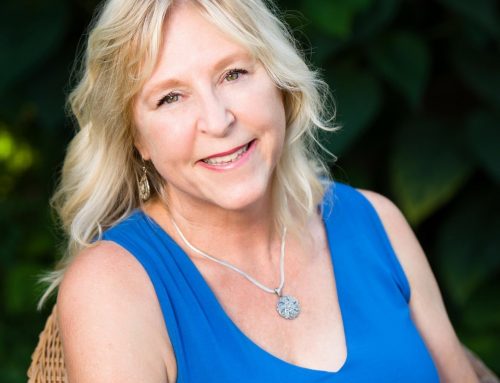
 Johnnie Alexander writes inspiring stories that linger in the heart. Where Treasure Hides, her debut novel, won the ACFW Genesis Contest (2011) and Golden Leaf Award (2014). Her first contemporary romance, Where She Belongs (Misty Willow Series; Revell), and her first novella, “The Healing Promise” (Courageous Bride Collection; Barbour), release in 2016.
She also has won Best Novel and Best Writer awards (Florida Christian Writers Conferences), and Bronze Medalist (My Book Therapy Frasier Contest). She volunteers as a category coordinator for the ACFW Genesis Contest, judges various contests, and serves as marketing director for the MidSouth Christian Writers Conference.
A graduate of Rollins College (Orlando) with a Master of Liberal Studies degree, Johnnie treasures family memories, classic movies, road trips, and stacks of books. She lives in the Memphis area with a small herd of alpacas and Rugby, the princely papillon who trees raccoons.
*Photo by Simon Clayson.




Another example! In the episode of NCIS I watched last night, Tony feeds his goldfish. It’s name is Kate–the same name as the agent who was tragically killed several seasons earlier. The tragedy wasn’t mentioned. It didn’t need to be.
Karin, thanks for having me as your guest today. As you can see, I’m still pondering “subtlety.”
Love NCIS and love how you highlighted tips for writers. The Good Wife is another one well written and full of nuances writers can learn by observing and listening. Great lesson, Johnnie!
Jeanie, I thought of you as I was writing the post because I know you’re a big fan. It’s been fun for me to watch the episodes in order. Thanks for stopping by!
Interesting. Even though l don’t write fiction,I find your advice will make me much more aware as a reader thanks
Thank you, Clella. I’m glad you enjoyed the post. And glad to see you here 🙂
Thanks for being here, Johnnie!